How To Get To Heaven From Belfast Ending Explained: Greta's Fate Revealed
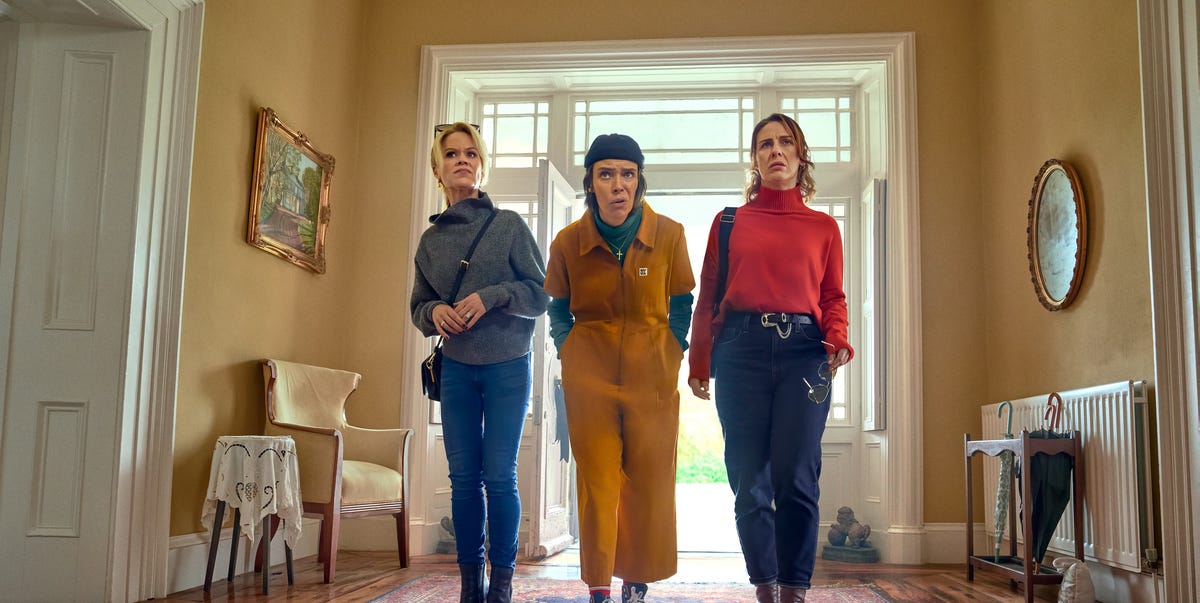
From the visionary mind of Lisa McGee, creator of the beloved Derry Girls, comes a much darker and more intricate tale that gripped viewers from its very first episode. How to Get to Heaven from Belfast plunged audiences into a whirlwind of mystery, rekindled friendships, and shocking revelations. The series begins with the seemingly tragic news of Greta's (Natasha O’Keeffe) death, bringing together her estranged childhood friends – Saoirse (Roísín Gallagher), Robyn (Sinéad Keenan), and Dara (Caoilfhionn Dunne) – for a wake that quickly unravels into a complex web of deceit and danger. The central question that lingered throughout was: How To Get To Heaven From Belfast Ending Explained, and what truly became of Greta?
The journey takes our protagonists back to their shared past, forcing them to confront not only forgotten memories but also the familiar, often unsettling, faces that shaped their youth. As the narrative progressed, it became abundantly clear that the initial premise was nothing more than a meticulously crafted illusion. This article will delve deep into the surprising finale, pulling back the curtain on the show's biggest secrets and finally revealing Greta's true fate.
The Shocking Revelation: Who Was Really in the Coffin?
The first major twist of How to Get to Heaven from Belfast arrived swiftly, throwing the audience and characters alike into disarray: Greta, despite the elaborate wake, was very much alive. This revelation immediately shifted the entire dynamic of the series, transforming it from a drama about grief and reunion into a thrilling mystery. So, if Greta wasn't in the coffin, whose body lay there, mourned by a community unaware of the deception?
As the layers of the plot were peeled back, the truth emerged: the deceased was Jodie, another childhood friend of Greta's. Jodie's death wasn't part of a grand conspiracy in the way it initially appeared, but rather a tragic accident. She had come to confront Greta, and during their heated encounter, Jodie suffered a fatal fall down a set of stairs. Panicked and desperate, Greta found herself in an impossible situation. It was in this moment of crisis that Margo (Michelle Fairley), a seemingly peripheral but deeply influential figure, stepped in to devise a radical plan.
Margo orchestrated the elaborate ruse of Greta's death, not out of malice, but to give Greta a chance to "evaporate" and escape the consequences, both legal and personal, of Jodie's accidental death. The plan was nearly flawless, intended to allow Greta to disappear quietly and start a new life. However, it hinged on one crucial assumption: that no one would dare to look inside the coffin. Saoirse, driven by a gut feeling and perhaps a lingering sense of connection, defied expectations and peered into the casket, instantly recognizing that the woman inside was not Greta. This pivotal moment not only exposed the deception but also ignited the friends' relentless quest to find Greta and uncover the full truth, propelling the narrative forward with renewed urgency. To understand more about this critical turning point, you might find Unpacking Heaven from Belfast's Ending: Who Really Died? particularly insightful.
Unpacking The Evaporation Society: A Lifeline for Women
At the heart of Greta's elaborate disappearance and the broader machinations of the series lies "The Evaporation Society." This mysterious, clandestine organization plays a pivotal role, proving to be far more than just a shadowy presence. It's an underground network specifically designed to help women in dire, often life-threatening, situations vanish and establish new identities, effectively giving them a second chance at life when societal structures have failed them.
The show introduces us to several key figures within this society, whose loyalties initially appear ambiguous. Feeney (Saoirse-Monica Jackson), for instance, emerges as a complicated character. As show creator Lisa McGee revealed, Feeney is deeply entrenched in the society, having herself been helped by them as a very young, 13-year-old girl after experiencing a "horrific thing." This backstory imbues Feeney with a profound understanding of the society's mission but also hints at the deep-seated trauma that fuels her intensity. She is portrayed as "doll-like and pretty and fun and bubbly," yet beneath this surface lies a "real darkness, like terrifying," making her a formidable and unpredictable force.
Booker (Bronagh Gallagher) is another character whose allegiance shifts dramatically. For much of the series, Booker seems to be an antagonist, working against Greta. However, the finale reveals her true intentions: she is also a member of The Evaporation Society, and her seemingly hostile actions were, in fact, part of a larger plan to facilitate Greta's escape and ensure her safety. This twist underscores the moral complexities inherent in the society's operations, where conventional rules often don't apply, and extreme measures are taken to protect those in need. The Evaporation Society acts as a powerful commentary on the systemic failures that often leave vulnerable women with no other recourse, highlighting themes of female solidarity, survival, and the difficult choices people make when pushed to their limits. For a deeper dive into the organization's secrets, explore Heaven from Belfast Finale: The Evaporation Society's Secrets.
Greta's Past Haunts Her: The Secrets of Heaven's Veil
To truly grasp Greta's predicament and the driving forces behind The Evaporation Society's involvement, one must look back at her traumatic past, specifically her upbringing in the village of "Heaven's Veil," or "Caille Neamh" in Irish. This seemingly idyllic name belied a grim reality, as both Greta and Jodie were victims of severe neglect and abuse during their formative years there. This shared trauma forged an unbreakable, albeit destructive, bond between them.
A pivotal, dark secret from their childhood in Heaven's Veil was the burning down of a church. This act, born from desperation and perhaps a twisted sense of rebellion against their oppressive environment, represents the profound scars left by their neglectful upbringing. It’s a powerful symbol of their shared pain and defiance, an attempt to obliterate the very institutions that failed to protect them. This traumatic event fundamentally shaped Greta, instilling in her a deep-seated guilt and a yearning for escape.
The accidental death of Jodie, her accomplice in that childhood act of destruction, brought this buried past roaring back to the surface. It’s a tragic irony that the person who shared her darkest secret would ultimately be the catalyst for her forced "evaporation." Greta's current predicament is not just about avoiding legal repercussions for Jodie's death; it's about the inescapable weight of her past. Her journey is a profound exploration of how unresolved trauma and guilt can dictate one's present and future, making true freedom elusive, even when a new identity is offered. The village of Heaven's Veil, therefore, serves as more than just a setting; it's a character in itself, a constant reminder of the origins of Greta's pain and her desperate quest for peace.
The True Fate of Greta and What It Means for the Future
As the final episode of How to Get to Heaven from Belfast concludes, Greta's fate is cemented: she survives. She is not dead, nor is she apprehended by the authorities. Instead, she is last seen on the run, successfully "evaporating" with the assistance of The Evaporation Society. While her physical survival is assured, her future remains fraught with uncertainty and profound implications. She has been given a new life, a chance to shed her past, but at what cost?
The ending leaves us pondering the true meaning of "heaven" in the context of the show. Is it a state of freedom, an escape from judgment, or simply a cessation of pain? For Greta, "heaven" might represent the elusive peace she has sought since her traumatic childhood in Caille Neamh. Her escape, facilitated by women who understand the depths of desperation, suggests a form of redemption, not in a conventional sense, but through the solidarity of those who have also been wronged by society. However, the show cleverly avoids a neatly tied, happy ending. Greta's new life is one of anonymity and perpetual looking over her shoulder. The emotional scars from her past, the guilt over Jodie's death, and the knowledge that she can never truly return to her old life will undoubtedly follow her.
The finale masterfully leaves avenues open for potential future seasons. The Evaporation Society itself, with its complex network and morally gray operations, presents a rich ground for further exploration. What are the full ethical implications of their work? How many other women like Greta have they helped, and what are their stories? Greta's journey could continue as she navigates her new identity, perhaps even becoming an active participant in the society, helping others achieve their own "evaporation." The ending of How to Get to Heaven from Belfast is not just a conclusion; it's a beginning, signaling a future where the line between salvation and consequence remains tantalizingly blurred.
In conclusion, How to Get to Heaven from Belfast delivers a truly intricate and thought-provoking ending that transcends simple plot resolution. It masterfully pulls back the curtain on the central mystery, revealing that Greta is alive, saved by a secret society from the consequences of an accidental death and her own haunted past. The show delves deep into themes of trauma, female solidarity, and the elusive nature of redemption, leaving viewers with lingering questions about what it truly means to escape one's past and find a form of "heaven" in a world that often offers none. Lisa McGee's foray into darker territory is a resounding success, offering a complex narrative that will undoubtedly resonate long after the credits roll.