Unpacking Heaven from Belfast's Ending: Who Really Died?
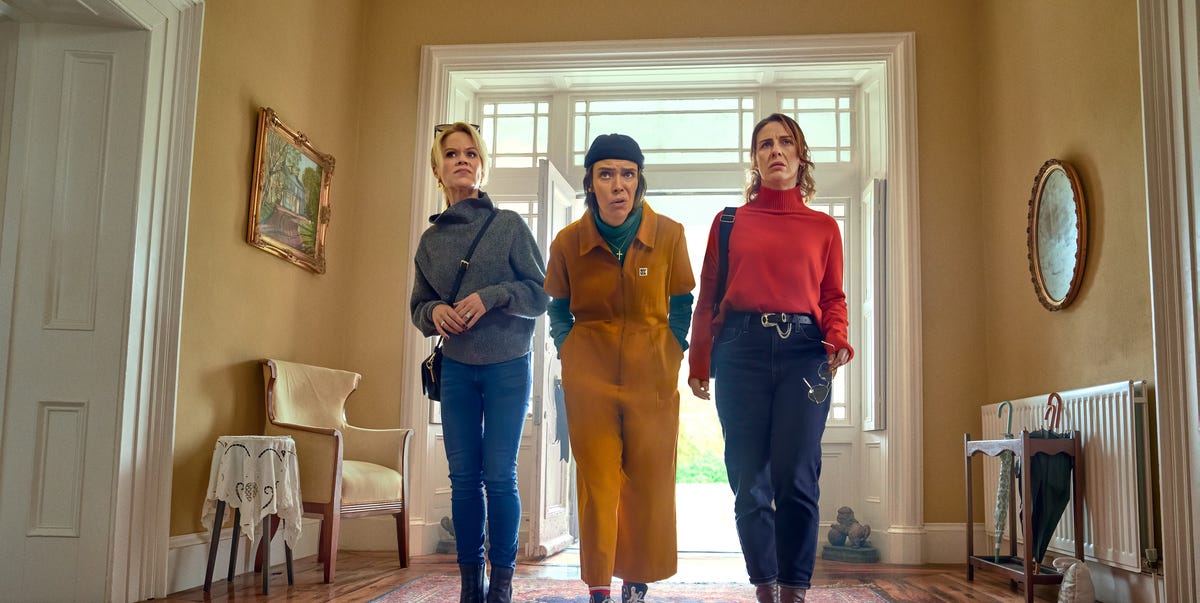
From the moment How to Get to Heaven from Belfast premiered, viewers were plunged into a gripping mystery, a dark journey far removed from the comedic stylings of its creator, Lisa McGee's previous work. The premise was deceptively simple: three childhood friends, Saoirse, Robyn, and Dara, reunite for the wake of their fourth friend, Greta. But as anyone who’s ventured into this captivating series knows, nothing is ever as it seems. The central question that hooks every viewer, and one we’re here to comprehensively unpack, is: who actually died in How to Get to Heaven from Belfast, and what was the true fate of Greta?
The series masterfully uses the initial shock of Greta’s supposed death to propel a narrative fraught with secrets, trauma, and a desperate search for truth. This article will delve deep into the surprising finale, explaining the elaborate deception, the tragic accident at its heart, and the shadowy organization that pulls many of the strings. Get ready for a full breakdown of How To Get To Heaven From Belfast Ending Explained.
The Initial Deception: Unpacking Greta's 'Death'
The first episode masterfully sets the stage, presenting Greta’s death as a tragic fact that brings together her estranged friends. The wake serves as a poignant, if unsettling, reunion. However, the show pulls its first major twist early on, revealing that Greta (played by Natasha O’Keeffe) is, in fact, alive. This immediate revelation shifts the entire premise from a story about grief to a full-blown mystery: if Greta isn't dead, then who is in the coffin, and why was this elaborate ruse orchestrated?
The journey to uncover Greta’s whereabouts and the truth behind her faked demise forms the backbone of the series. Saoirse’s accidental peek into the coffin, leading to her stark realization that the body wasn't Greta's, ignites the friends' quest. What begins as a search for answers about Greta quickly spirals into a confrontation with their shared past, revealing layers of buried secrets and unresolved trauma that connect them all. The show masterfully keeps viewers on their toes, constantly re-evaluating what they thought they knew about these characters and their entangled lives.
The Tragic Accident: Jodie's Fate and Greta's Dilemma
The core of the mystery surrounding Greta's 'death' is rooted in a truly tragic event involving her childhood friend, Jodie. It’s revealed that the person in the coffin, the one mourned at the wake, was actually Jodie. Her death was not part of a grand conspiracy initially, but a horrifying accident. Jodie had come to confront Greta, and during their heated encounter, she suffered a fatal fall down a set of stairs. This wasn't a malicious act on Greta's part, but a moment of panic and desperation that set off a chain reaction of events.
The significance of Jodie's death is deepened by the shared history between her and Greta. Both girls grew up in a place called "Heaven's Veil" (or "Caille Neamh" in Irish), a village steeped in neglect and abuse. This traumatic upbringing forged a complicated bond between them, leading them to commit a "really bad thing" in their youth: burning down a church. This shared, dark secret undoubtedly contributed to Greta's profound panic after Jodie's accidental death. The fear of being implicated, of her past trauma resurfacing, and the profound guilt of being involved in another friend's demise, drove her to seek an extreme solution.
The weight of these shared experiences and the grim circumstances of Jodie's death illustrate the depths of the characters' struggles. It highlights how past trauma can dictate present actions, pushing individuals to make drastic choices to escape perceived consequences or revisit painful memories. This underlying narrative adds significant emotional gravity to the seemingly outlandish plot, grounding it in the very real, if extreme, reactions to fear and desperation.
Margo's Master Plan: The Evaporation Society's Role
In the immediate aftermath of Jodie's accidental death, Margo (played by Michelle Fairley), Greta’s mother figure and a seemingly formidable character, steps in with a shocking plan: to fake Greta's death. Margo's quick thinking and decisive action set the elaborate deception in motion. But she wasn't acting alone; she was connected to a secretive and powerful organization known as The Evaporation Society.
This enigmatic female society is introduced as a network dedicated to helping women in dire situations "evaporate" and escape trouble, often by fabricating new identities or faking their deaths. Two key members of this society are Feeney (Saoirse-Monica Jackson) and Booker (Bronagh Gallagher). While Booker initially appears to be an adversary, her true role is revealed to be assisting Greta in her escape and new life. Feeney, as described by creator Lisa McGee, is a particularly complex and chilling character:
"She's part of a society called The Evaporation Society, and it's a female society that helps women get out of trouble... She's doll-like and pretty and fun and bubbly, but we realize there's just beneath the surface, there's just real darkness, like terrifying. So I would say she's intense and she's part of a group of women that are this little, very particular organization that maybe doesn't - the rules of normal society don't apply."
This insight into Feeney reveals the moral ambiguity inherent in The Evaporation Society. While ostensibly a force for good, helping vulnerable women, their methods operate outside legal and ethical norms. They represent a fascinating exploration of female solidarity taken to its extreme, offering a stark commentary on the lengths women might go to protect themselves and each other when conventional systems fail. The society's existence poses a profound question: when facing impossible circumstances, are these "rules of normal society" truly adequate, or does one need a more radical solution? This unique aspect is further explored in Heaven from Belfast Finale: The Evaporation Society's Secrets.
Beyond the Wake: The Wider Conspiracy and Moral Ambiguity
The individual tragedy of Jodie's death and Greta's subsequent disappearance are just the surface of a much larger, morally complex narrative. The Evaporation Society's involvement elevates the plot from a personal drama to a commentary on survival, systemic failures, and the bonds forged in desperation. The society's operatives, like Feeney and Booker, are not simply allies or enemies; they embody shades of grey, driven by their own pasts and a collective mission to protect women, even if it means bending or breaking every rule.
The series constantly challenges viewers to question the nature of justice and consequences. Is it justifiable to fake a death and facilitate an escape when an accidental killing has occurred? The show deliberately avoids easy answers, instead plunging its characters—and its audience—into a world where trauma and loyalty intertwine. Robyn's accidental involvement in a hit-and-run late in the series further complicates the web, adding another layer of desperate decisions and the ripple effects of panic.
This wider conspiracy forces the original group of friends to confront not just Greta's fate, but their own choices and complicity, both past and present. The series masterfully blurs the lines between victim and perpetrator, creating a narrative rich in psychological depth. It delves into the lingering impact of childhood trauma, showing how these women, despite their adult lives, are still deeply affected by the "really bad thing" they did in Heaven's Veil and the abuse they suffered there. Their journey is not merely about finding Greta, but about finding closure and understanding for themselves.
Why "How To Get To Heaven From Belfast" Resonates: Themes of Escape and Identity
The title, How to Get to Heaven from Belfast, is far more than a catchy phrase; it's a metaphor for the entire series. "Heaven's Veil," the village of Greta and Jodie's traumatic youth, represents a hellish past from which escape seems impossible. "Getting to Heaven" thus becomes a symbolic quest for peace, redemption, or simply a new beginning, far removed from the geographical and psychological confines of their past in Belfast. The show resonates deeply because it taps into universal themes of escaping one's past, finding identity amidst chaos, and the enduring, often complicated, power of friendship.
Lisa McGee's pivot from the lighthearted humor of Derry Girls to this darker, more mysterious territory showcases her incredible versatility as a storyteller. She weaves a narrative that is both thrillingly intricate and emotionally raw, forcing viewers to confront uncomfortable truths about human nature and the societal structures that can lead to such desperate measures. The show's ability to maintain suspense while simultaneously exploring profound psychological depths is a testament to its compelling writing.
For viewers, the show offers practical insights into complex narratives: always question initial assumptions, pay close attention to character motivations, and embrace moral ambiguity. It's a series that rewards careful viewing, challenging you to piece together clues and understand the deep-seated trauma that drives its characters. The journey of Saoirse, Robyn, and Dara isn't just about finding Greta; it's about confronting their own unresolved issues, and ultimately, finding their own path to a form of "heaven"—be it peace, closure, or a fresh start.
In conclusion, How to Get to Heaven from Belfast delivers a truly surprising and emotionally resonant ending. Greta does not die; rather, her "death" is an elaborate, desperate ruse concocted by Margo and supported by The Evaporation Society to protect her after Jodie's accidental demise. The series masterfully uses this central mystery to explore profound themes of trauma, female solidarity, and the lengths people will go to escape their pasts. It’s a compelling, intricate mystery that will leave you thinking long after the credits roll, proving that sometimes, the only way out is through a cleverly faked death and the help of a secret society.